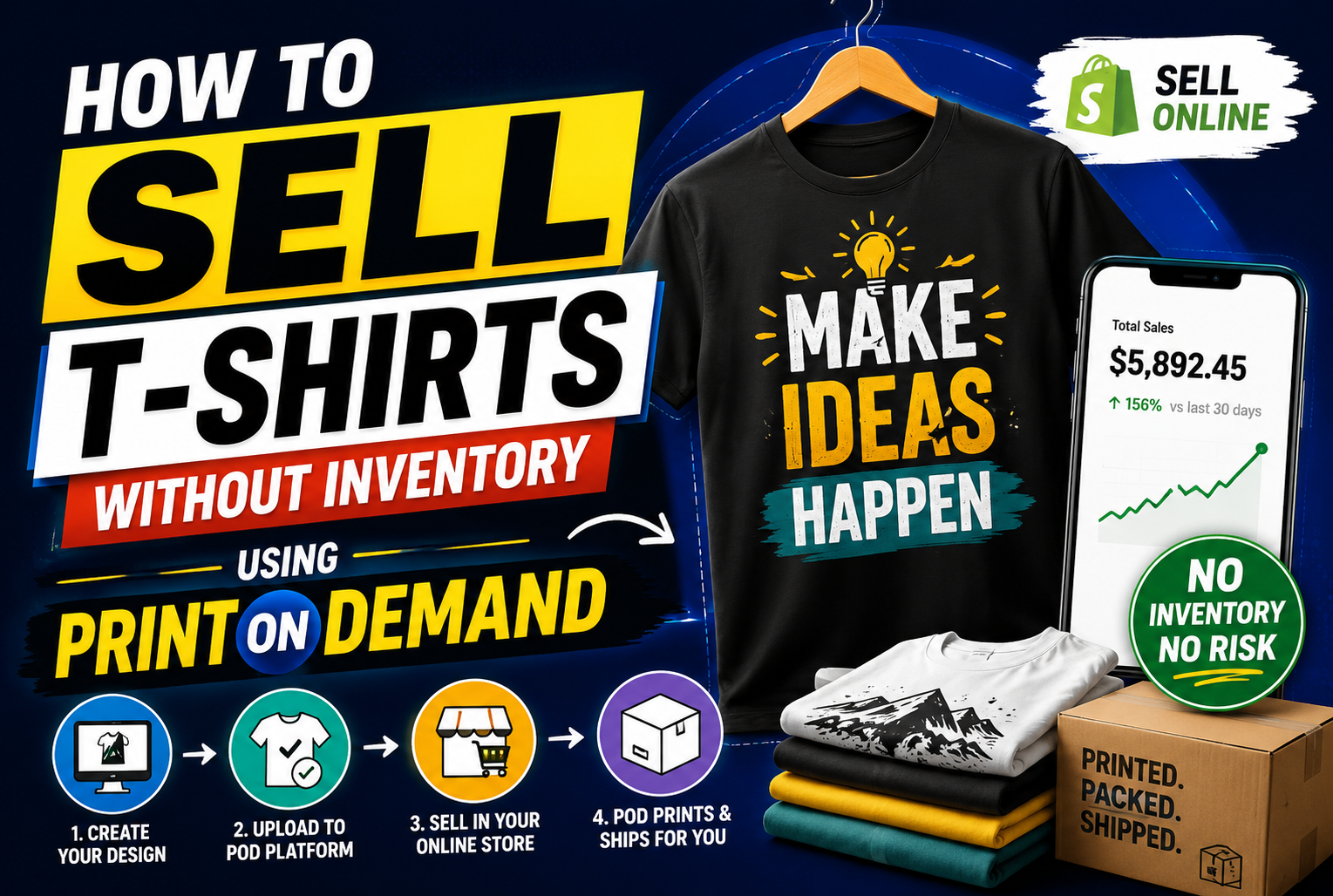
How to Sell T-Shirts without Inventory Using Print on Demand
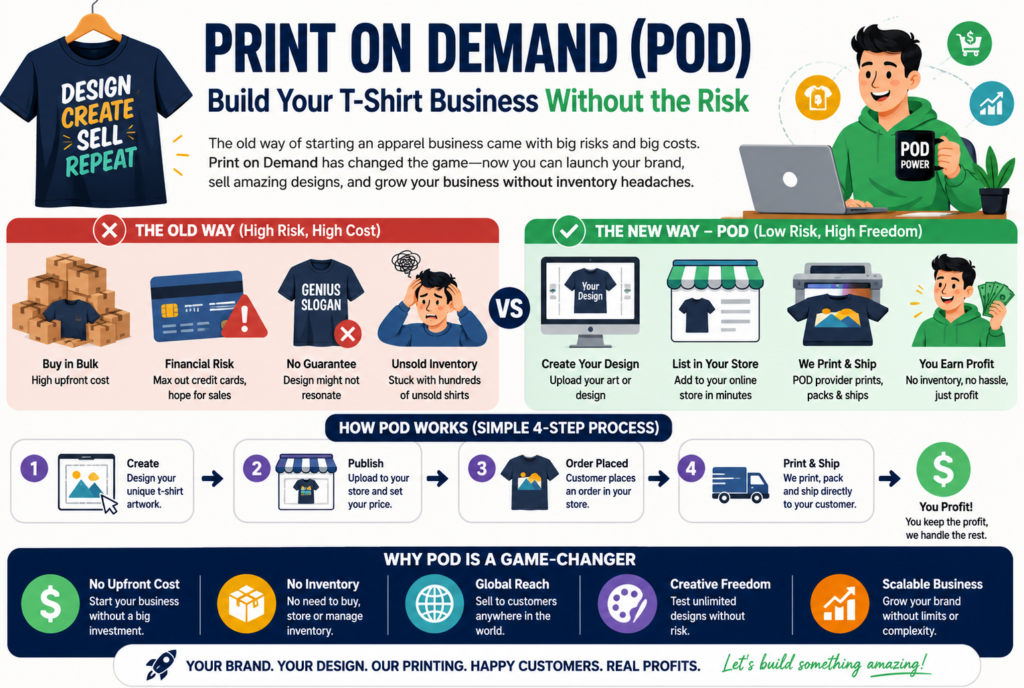
There’s a classic nightmare that haunts every first-time garb entrepreneur: a garage stacked from ground to ceiling with 500 unsold t-shirts, a maxed-out credit card, and the sinking recognition that your “genius” slogan failed to resonate with the market. For decades, this turned into the unavoidable hazard of getting into the apparel business. Nowadays, it is absolutely optional. Print on demand (POD) has rewritten the guidelines — and you don’t need a warehouse, a screen-printing machine, or even a big upfront price range to build a real t-shirt commercial enterprise.
What is print-on-demand?
Print on demand is a fulfillment model wherein merchandise are synthetic simplest after a consumer places an order. You design the shirt. a third-birthday celebration dealer prints it, programs it, and ships it without delay to the purchaser — all below your logo name. By no means contact the inventory. Never pre-purchase stock. You pay the dealer their manufacturing value, and you also preserve the difference between that and your retail fee.
It sounds nearly too smooth, and in lots of procedures it is. However, like all business models, it rewards folks who understand its mechanics.
How the system honestly works
The workflow is simple after you apprehend the shifting components:
- Create your layout. This may be achieved in Canva, Adobe Illustrator, Photoshop, or even with free gear like GIMP. The secret’s excessive resolution — maximum POD systems require a minimum 300 DPI paintings to ensure fine printing. Your layout is your product, so invest in the actual concept here.
- Pick out a POD platform. The fundamental game enthusiasts are Printful, Printify, Gelato, and Redbubble. Every has one-of-a-kind product catalogs, pricing structures, print pleasant, and transport speeds. Printful integrates seamlessly with Shopify and Etsy. Printify gives the widest network of print providers, giving you price flexibility. Gelato is powerful for worldwide sellers because it has manufacturing facilities in multiple countries, dramatically decreasing shipping times.
- Connect with a sales channel. You may promote through your personal Shopify or WooCommerce shop, on Etsy (which already has integrated visitors), or on marketplace structures like Redbubble and Merch by means of Amazon. Many dealers run both — their own keep for emblem building, and a marketplace for natural discovery.
- Set your costs and post. Add your mockups, write your product descriptions, and cross live. Whilst an order comes in, your POD platform is routinely notified, prints the blouse, and ships it. You receive the income margin.
The Economics: What You Really Make
Honesty topics here. The margins in POD are slimmer than traditional wholesale-and-resell fashions. A fashionable unisex t-blouse on Printful may cost you $12–$15 to produce. In case you sell it at $28, you’re clearing kind of $thirteen–$16 consistent with shirt, before any advertising charges. This is a stable margin percentage-sensible, but it means you want extent or top-class pricing to construct meaningful income.
The levers you could pull:
- Area of interest pricing power — A shirt centered at trauma nurses or left-exceeded guitarists can command $35–$40 because it feels personal and uncommon. Widespread designs compete on price; area of interest designs compete on identification.
- Product bundling — presenting two shirts for a small cut price will increase average order cost without touching your unit economics a great deal.
- Layout volume — extra listings mean extra chances to be discovered organically. Successful POD dealers frequently have dozens or loads of active designs throughout unique niches.
Deciding on Your niche (that is, in which the majority move wrong)
The most serious mistake new POD sellers make is designing for all of us. “Properly Vibes best” on a pastel history isn’t a product — it’s a commodity already sold via ten thousand other stores. Your aim is to discover a particular network that has shared identity, passion, and spending behavior.
Suppose: beekeepers, sourdough bakers, retired army veterans, elementary faculty instructors, disc golfers. Those communities are hungry for products that communicate directly to them. A shirt that announces “I would alternatively be in My Hive” will outsell a normal nature print every single time, as it belongs to someone.
Research your niche before designing. Browse Etsy’s bestseller lists, have a look at Amazon Merch’s trending classes, and be aware of what Facebook groups and subreddits are enthusiastic about. design for actual people with actual enthusiasms.
Advertising: Getting Your First Income
A POD shop without site visitors is only a URL. Here’s where many sellers stall. The good information is that organic channels work properly for POD because the products are inherently visible and niche-unique.
Pinterest is chronically underused by POD sellers and is a goldmine. Pins have long shelf lives, and a well-designed mockup can power visitors for months or years. Instagram and TikTok work properly if you’re willing to expose the story — the design process, the area of interest community, and the reactions. People buy from manufacturers they sense are connected to.
Etsy seo is its very own ability, really worth learning. Get your keywords right to your name and tags, and Etsy’s internal search can deliver steady natural site visitors with 0 ad spend.
Paid advertising on Meta works, but calls for a checking out budget and a few endurance. Start organic, research what resonates, then scale with commercials as soon as you’ve got verified designs.
The Honest Drawbacks
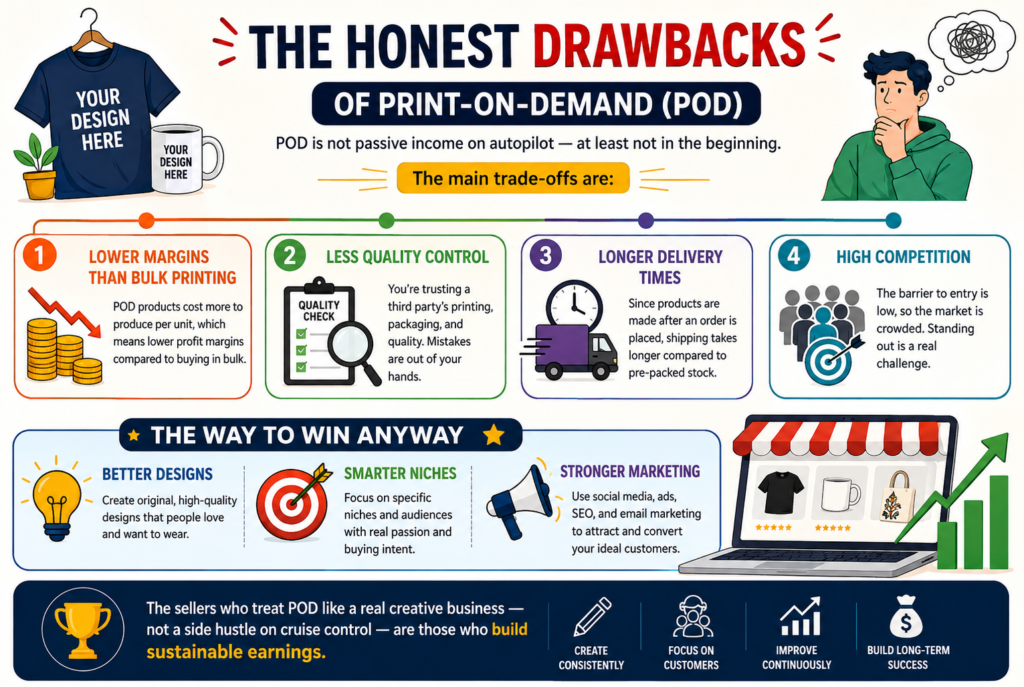
POD is not passive income on autopilot — as a minimum, no longer in the beginning. The number one exchange-offs are:
- lower margins than bulk printing
- much less satisfactory control — you’re trusting a third birthday celebration’s output
- Longer delivery instances as compared to pre-packed stock,
- high competition — the barrier to entry is low, so the marketplace is crowded
The manner to win anyway: better designs, smarter niches, and more potent advertising. The sellers who treat POD like a real innovative enterprise — not a side hustle on cruise control — are those who build sustainable earnings.
Getting started this week
You don’t want to end your activity or invest heaps of greenbacks. right here’s a realistic on-ramp:
- Choose one area of interest where you understand something approximately
- Create five designs the use of Canva or Illustrator
- Open a loose Printify account and join it to an unfastened Etsy store
- Listing your merchandise with strong search engine optimization titles and compelling mockup photos
- Post on Pinterest and relevant groups
The complete setup can cost you nothing but time. If a layout sells, you have verified your idea. If it doesn’t, you’ve discovered something — and you’re no longer sitting on 500 shirts in your storage.
That is the real beauty of Print on call for: the value of being incorrect is only some hours of your time. The cost of being proper is a business that ships whilst you sleep.